Unveiling the Mysterious Connection: Gothic Cathedrals, Floating Rocks, and the Secrets of Space
- Chusaengsri

- Jan 9, 2025
- 4 min read
Art, architecture, and the universe have intrigued humans for centuries. Among the awe-inspiring creations of human hands are Gothic cathedrals—grand structures stretching toward the sky. Similarly captivating are celestial objects like floating rocks, asteroids, and stars. This post will explore the intriguing connections between these earthly masterpieces and the mesmerizing wonders of space, inviting you to consider the mysteries that link them.
The Awe-Inspiring Gothic Cathedral
Gothic cathedrals are renowned for their pointed arches, ribbed vaults, and flying buttresses. These are not just places of worship; they are enduring symbols of human creativity and engineering.
Construction on these magnificent structures began in the 12th century and continued into the 16th century, with iconic examples like Notre-Dame de Paris and Chartres Cathedral. Notre-Dame, for instance, stands 69 meters tall, showcasing how these cathedrals were designed to convey a sense of verticality, encouraging people to look upward. The elaborate stained-glass windows served both as decoration and narrative—each scene illustrating biblical stories and inspiring awe in those who viewed them.
The engineering challenges faced by builders were considerable. To support the height and weight of their designs, they developed innovative solutions like the flying buttress. This external support system not only aided stability but also allowed cathedrals to feature larger windows, filling interiors with both light and color.
Floating Rocks: Nature's Celestial Art
In contrast to the solidity of Gothic architecture are the ethereal floating rocks found on Earth and in outer space. A stunning example is the "Floating Rock" in Zhangjiajie, China, which appears to defy gravity amid lush surroundings.
These peculiar formations often arise from geological processes, making them fascinating natural wonders. In space, asteroids can represent cosmic floating rocks. The Near-Earth Asteroid (NEA) population consists of thousands of these remnants, with around 25% of them being classified as potentially hazardous due to their proximity to Earth. Studying these celestial bodies helps scientists gain insights into the origins of our planet and the solar system.
Floating rocks remind us of nature's delicate balance between permanence and chaos. Whether we admire a Gothic cathedral towering toward the stars or study a drifting asteroid, we are reminded of life's intricate interactions between structure and the forces of nature.
The Cosmic Dance of Stars
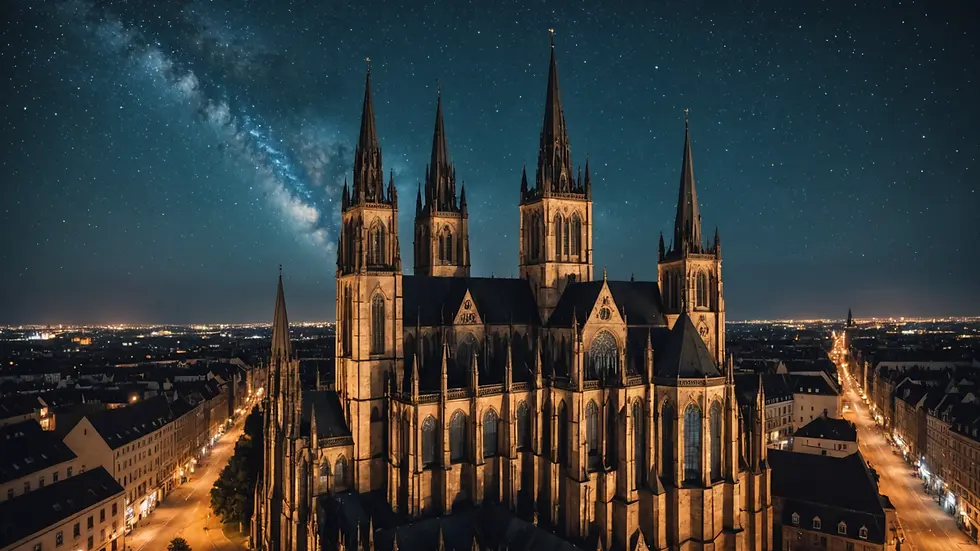
Stars, gleaming jewels against the night sky, have a special connection with Gothic cathedrals. When these architectural marvels were constructed, the intention was often to reflect the grandeur of the cosmos. The artistry in designs, from rose windows to soaring spires, sought to echo the celestial beauty that illuminates our nights.
Throughout history, stargazing has influenced human culture, inspiring myths, legends, and art. The careful craftsmanship in Gothic architecture mirrors this celestial fascination. Visitors to these magnificent cathedrals often feel enveloped by the soft glow of stained glass, reminiscent of the twinkling stars above.
Just as stars are born, live, and eventually die, Gothic cathedrals experience their own trials over time. Projects aimed at restoring these architectural gems are ongoing, underlining their importance as historical artifacts. For example, the restoration of Notre-Dame de Paris, following the devastating fire in 2019, symbolizes a dedication to preserving cultural heritage as resolutely as we admire the stars.
Asteroids: Messengers from the Past
Asteroids serve as time capsules, holding information about the early solar system. Composed of materials from billions of years ago, they offer scientists valuable insights. Research into these celestial bodies is essential for understanding how our planets formed. In a similar way, historians analyze Gothic cathedrals to grasp the social and cultural contexts in which these structures evolved.
An intriguing aspect of asteroids is their potential to collide with other space objects, resulting in meteorites that occasionally crash to Earth. This phenomenon mirrors the historical challenges faced by Gothic cathedrals, which have endured wars, fires, and other calamities threatening their existence.
By studying asteroids, we deepen our connection to the universe and recognize the delicate balance of creation and destruction shared both in the cosmos and in our own architectural achievements.
The Interwoven Threads of Humanity and the Cosmos
Gothic cathedrals, floating rocks, and stars may seem separate, yet they are profoundly linked through human experience. Both cathedrals and cosmic phenomena inspire awe, shaping our perspectives on life and our place in the universe.
Each Gothic cathedral is a testament to the community it serves, representing the collective identity of its people. Similarly, as we explore the wonders of space—pondering asteroids, stars, and floating rocks—we recognize our shared humanity. Our journey through the cosmos mirrors the artistry that gives shape to our earthly realm.
Reflecting on Connections
The exploration of Gothic cathedrals, floating rocks, and cosmic mysteries unveils a rich tapestry woven with creativity, science, and spirituality. Each cathedral is a tribute to human ingenuity, aspiring toward the stars, just as our curiosity drives us to explore the vast universe.
When you next stand before a Gothic cathedral or gaze at the stars, take a moment to reflect on the stories that connect our earthly creations to the magnificent wonders of the cosmos.


Comments